
My Daily Drawing Routine: How I Create Tattoo Flash That’s Built to Last
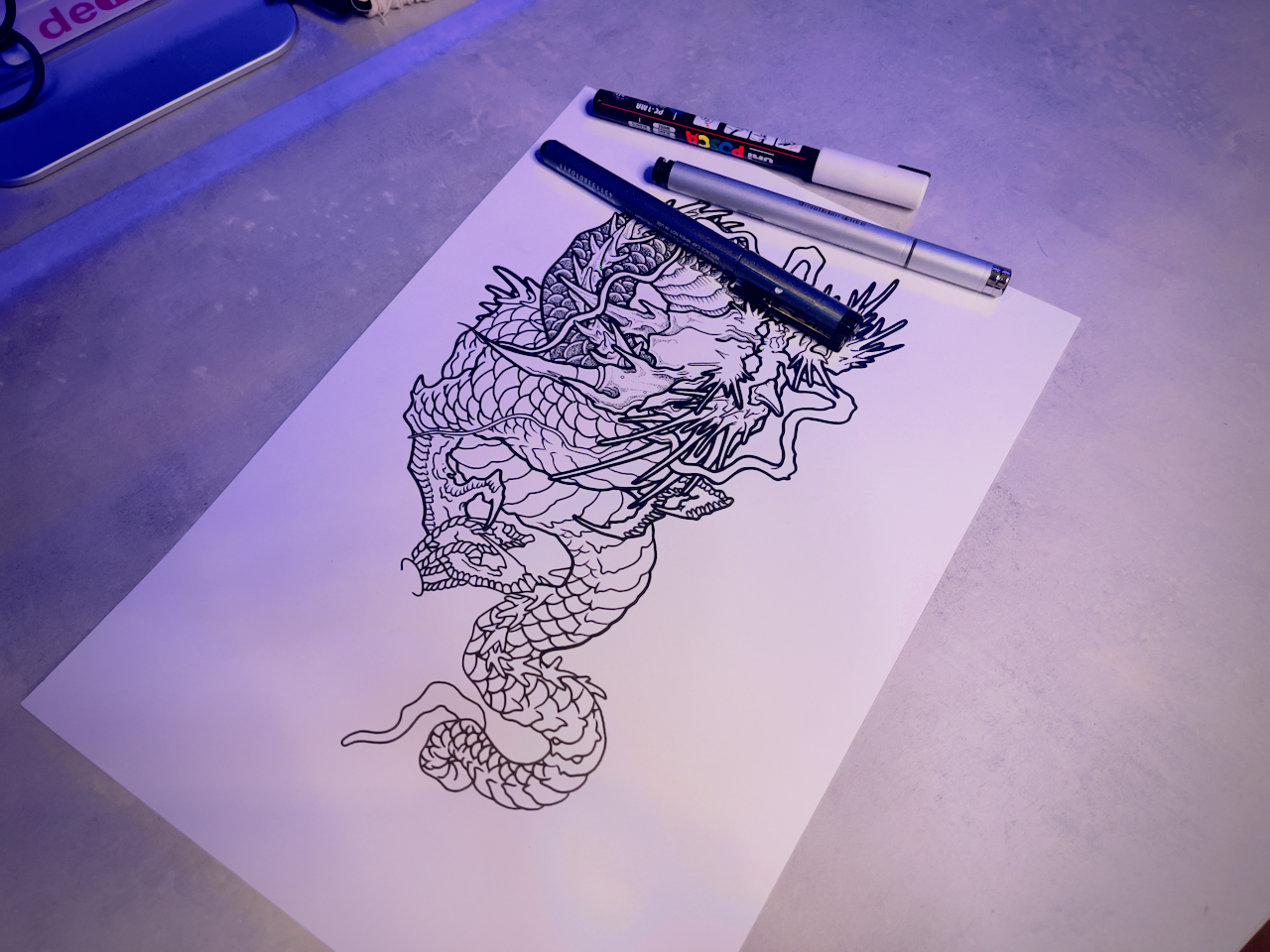
Introduction
One of the most common questions I get is how I actually draw my tattoo designs.
Not just the ideas, but the process — the routine, the tools, and the way everything comes together from a blank sheet into a finished piece of tattoo-ready artwork.
The truth is, there isn’t a shortcut.
Good tattooing starts with good drawing, and good drawing comes from consistency. It’s something I work on daily, whether I’m preparing client work or building out my own flash.
This post breaks down exactly how I approach it — from materials and tools to linework, dotwork, and how I archive everything I produce.
Why Drawing Still Matters in Tattooing
In a world where a lot of designs are pulled from the internet or reused, drawing by hand still sets the foundation.
For me, drawing isn’t separate from tattooing — it is tattooing.
Every line I put on paper translates directly to how I tattoo. The discipline, the control, and the decision-making all start here.
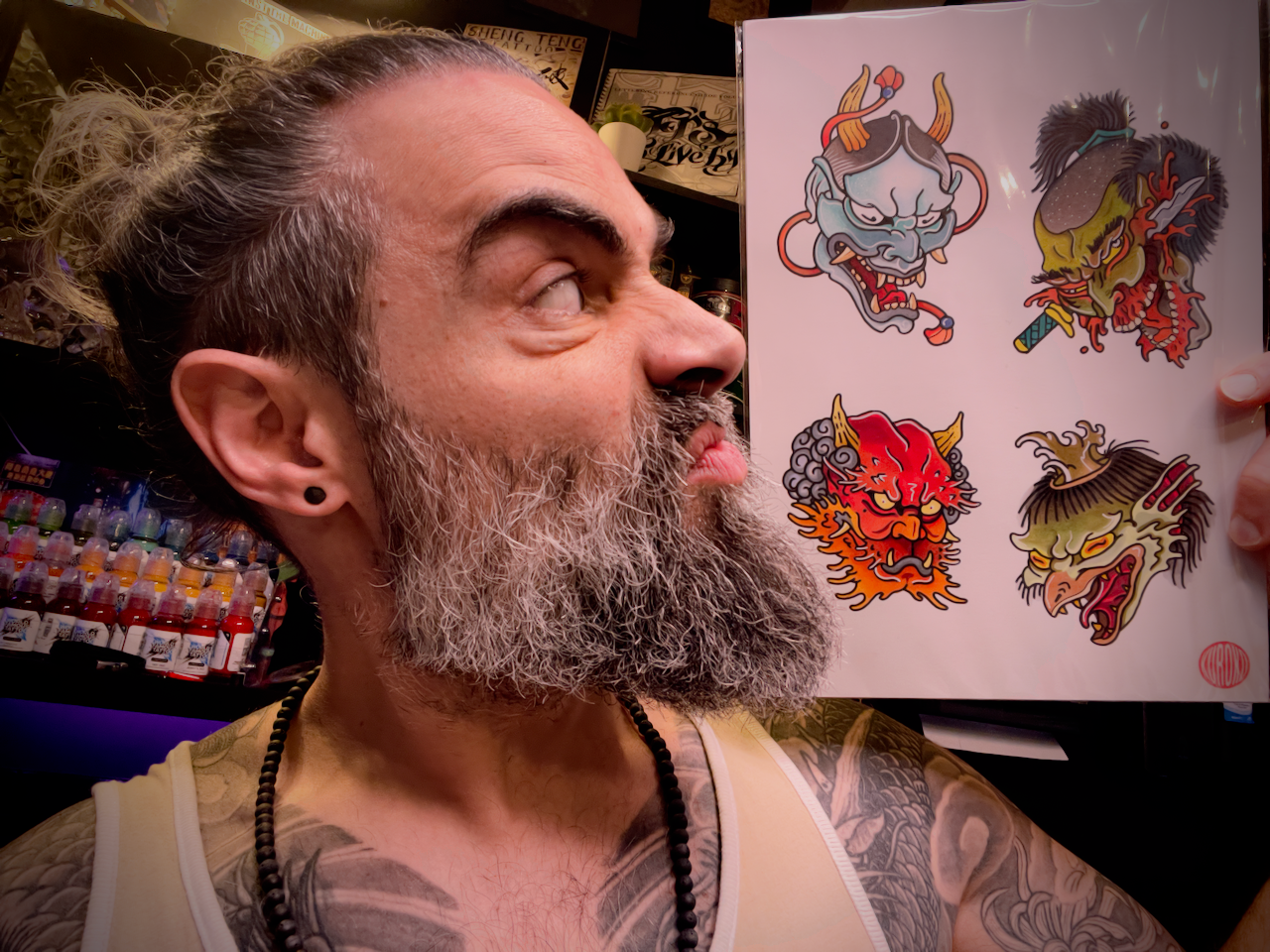
If the drawing isn’t right, the tattoo won’t be either.
My Daily Drawing Routine
Most of my drawing happens early.
I’m usually up around 5am, when everything is quiet and there are no distractions. That time is important — it allows me to focus properly and get into a flow before the day starts pulling me in different directions.
Depending on what I’m working on, I’ll either:
Develop new flash sheets
Refine existing designs
Practice specific elements like line weight or shading
I don’t always sit down with a finished idea. A lot of the time, the process is about exploration — building compositions, testing layouts, and letting the piece evolve as I work.
The key is consistency.
Even on days where energy is low, I still show up and put pen to paper.
The Materials I Use
I keep my setup simple, but everything I use has a purpose.
Paper — Bristol Board
I work almost exclusively on Bristol board. It’s smooth, durable, and holds ink cleanly without bleeding. That’s important when you’re working with fine linework and detailed dotwork.
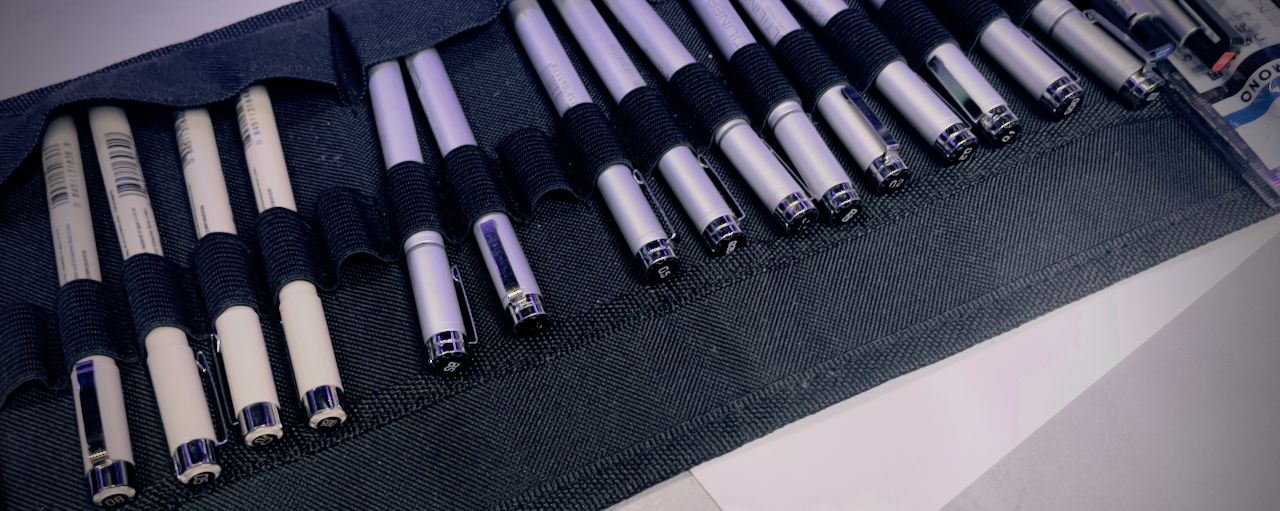
Linework — Copic Multiliners
For linework, I use Copic multiliners in a range of sizes. These give me consistency and control, whether I’m laying down bold outlines or fine internal detail.
The key with these pens is pressure and patience. Clean lines come from steady movement, not rushing.
Colour — Chameleon Pens
For colour work, I use Chameleon pens. What I like about them is the ability to create subtle gradients without overcomplicating the process.
They allow me to build depth into a piece while still keeping it clean and readable — which is important for tattoo design.
Linework: The Foundation of Everything
Linework is where most designs succeed or fail.
I focus heavily on:
Consistent line weight
Smooth, confident strokes
Clean connections between elements
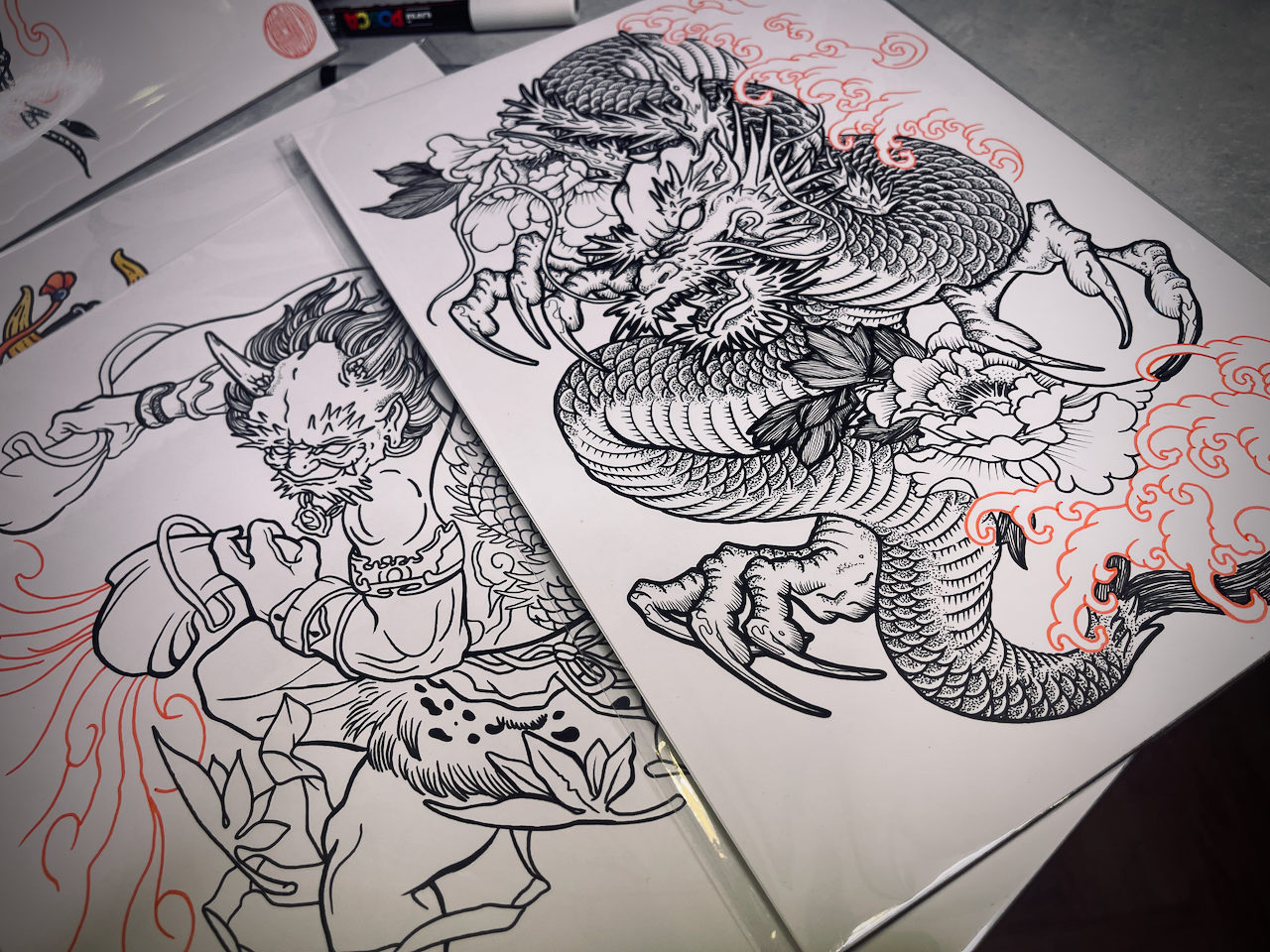
There’s no hiding poor linework. If it’s off, it shows immediately.
That’s why I spend a lot of time refining this. Slowing down. Making sure each line is placed properly.
Dotwork and Detail
A lot of my work includes dotwork and fine detail, which adds depth and texture to the design.
Dotwork isn’t about randomly filling space — it’s controlled.
I build it gradually:
Denser areas for shadow
Lighter areas for transitions
Consistent spacing to keep it clean
It takes time, but it’s worth it. Done properly, it gives the piece a level of detail that holds up both on paper and on skin.
Building Flash Sheets
When I create flash sheets, I don’t just fill a page.
Each sheet is composed.
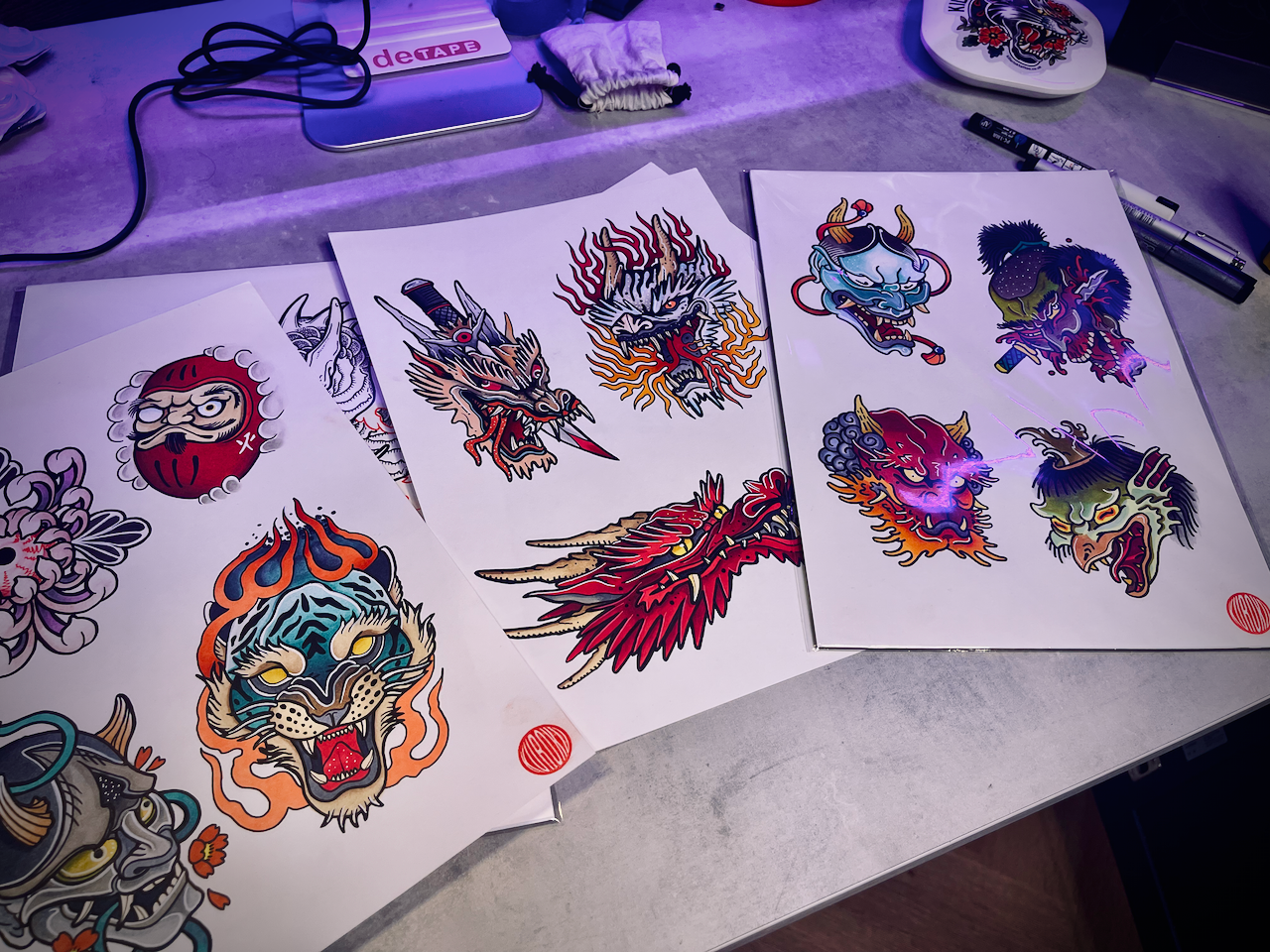
I think about:
Balance across the page
Variety in subject matter
Flow between pieces
Sometimes I’ll scan individual drawings and arrange them digitally into A3 sheets for printing and display in the studio.
This allows me to present the work properly while still keeping everything hand-drawn at its core.
My Archive System
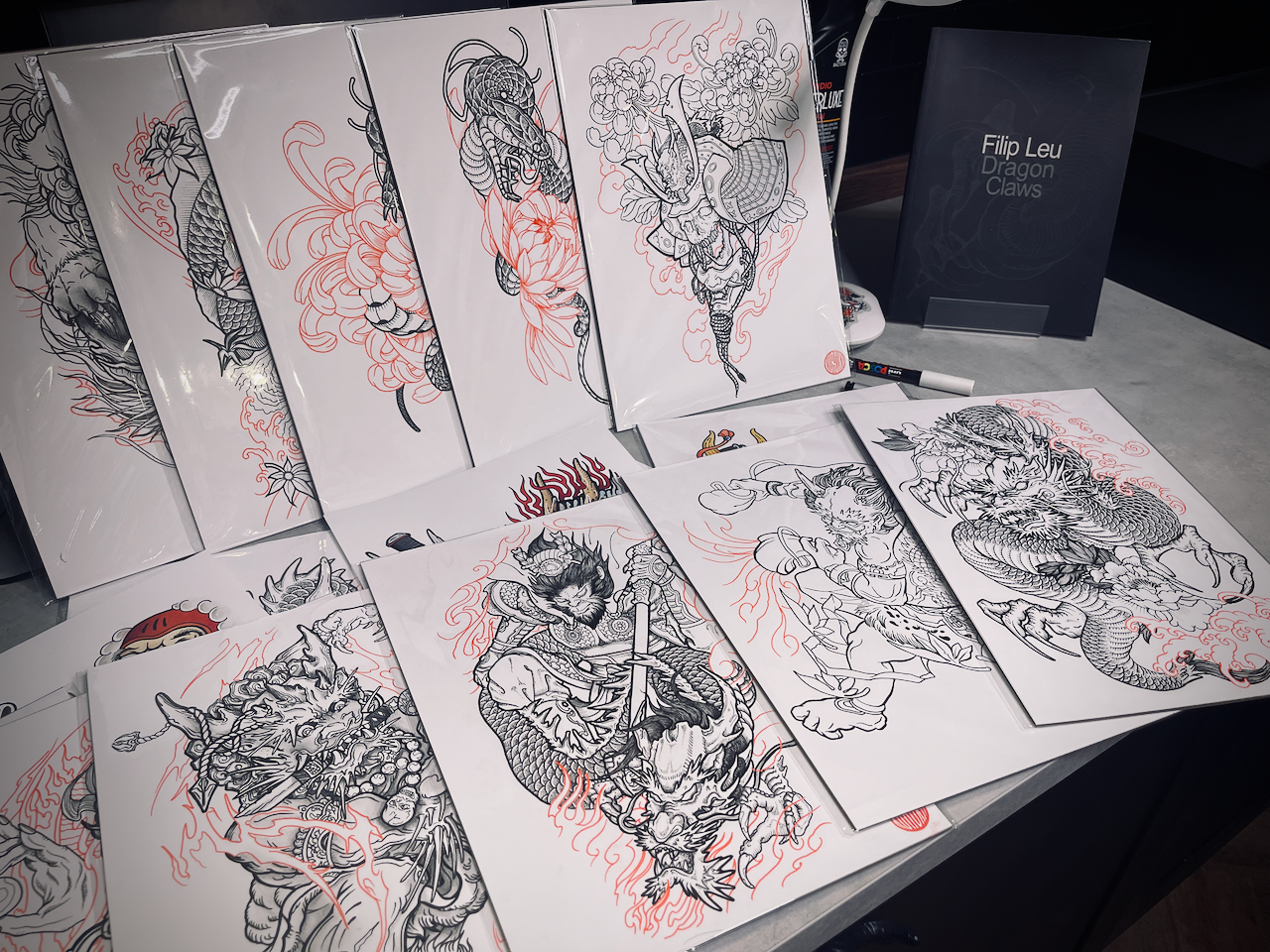
Everything I draw gets archived.
This is something a lot of people overlook, but it’s important.
Each piece is either:
Stored physically in protective sleeves
Digitised and catalogued
Over time, this builds a library of work that I can revisit, refine, or use as a starting point for future designs.
It also tracks progression.
You can see how your work evolves, where you’ve improved, and where you need to keep pushing.
Why This Routine Matters
This routine isn’t about being perfect.
It’s about building a standard.
By showing up consistently, using the right materials, and focusing on the fundamentals, the work improves over time. That translates directly into better tattoos, better design decisions, and more confidence in the process.
There’s no shortcut to that.
At the end of the day, tattooing starts long before the machine is switched on.
It starts here — with pen, paper, and time invested into getting it right.
That’s the foundation of everything I do at Kuroko Ink.
And it’s not something I take lightly.